
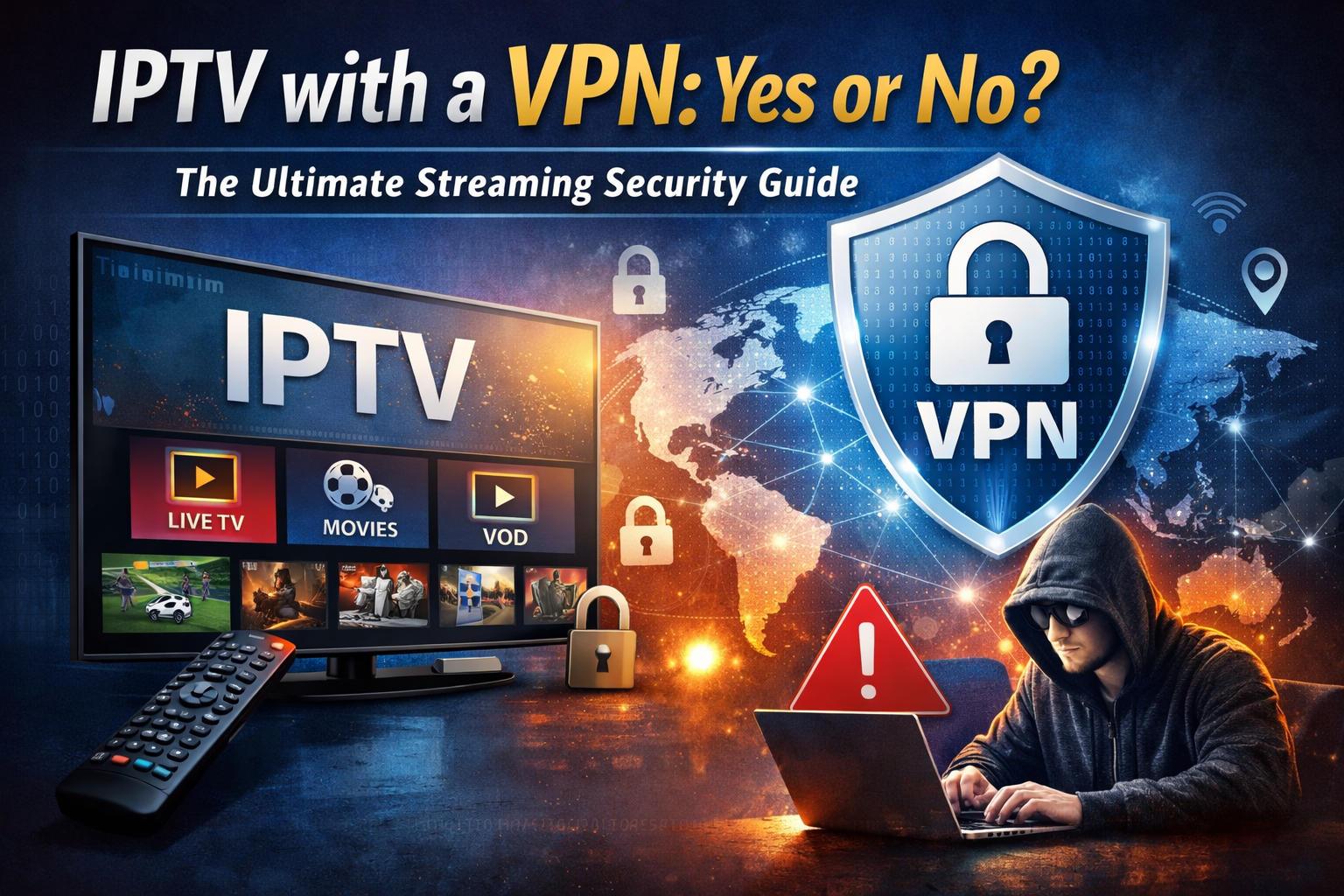
Streaming television has changed the way people watch entertainment. Instead of traditional cable or satellite services, many users now rely on Internet Protocol Television to access live channels, movies, and on-demand content. But one question continues to appear again and again in every tech forum: IPTV with a VPN: Yes or No?
If you are considering using IPTV services, understanding whether a VPN is necessary can help you protect your privacy, improve performance, and avoid potential risks. In this guide, we will explain everything in simple and clear terms so you can make the right decision for your home setup.
What Is IPTV?
IPTV (Internet Protocol Television) allows users to stream TV content through an internet connection instead of traditional broadcasting formats. It works on smart TVs, smartphones, computers, and streaming devices like the Amazon Firestick. Unlike cable services, IPTV platforms offer flexibility. You can choose what to watch and when to watch it.
Many providers offer international channels, sports packages, and video-on-demand libraries at affordable prices. Because IPTV relies completely on your internet connection, security and speed become important factors. This is where the core discussion about IPTV with a VPN: Yes or No? begins for most new users.
What Is a VPN?
A VPN (Virtual Private Network) is a tool that encrypts your internet traffic and hides your IP address. When you connect to a VPN server, your online activity becomes private and secure. Instead of your internet service provider seeing what you stream, your data is encrypted. This makes it difficult for third parties to monitor your activity.
VPNs are commonly used for protecting online privacy, bypassing geo-restrictions, and avoiding ISP throttling. When we evaluate the choice of IPTV with a VPN: Yes or No?, we must look at how these VPN features interact with streaming data.
Why Some People Use IPTV with a VPN
There are several reasons why users choose to combine their streaming service with a secure tunnel.
1. Privacy Protection
Some IPTV providers operate in legal gray areas depending on the country. A VPN adds an extra layer of privacy by hiding your IP address. This helps protect your identity while streaming. In the debate of IPTV with a VPN: Yes or No?, privacy is usually the number one reason people say “Yes.”
2. Avoiding ISP Throttling
In some regions, internet providers may slow down streaming traffic if they detect high bandwidth usage. A VPN prevents your ISP from identifying that you are using IPTV, which may improve streaming stability. If you suffer from buffering, the answer to IPTV with a VPN: Yes or No? might be a clear yes.
3. Accessing Geo-Restricted Content
Certain IPTV channels are restricted to specific countries. A VPN allows you to connect to servers in different regions, giving you broader access. For example, users searching for iptv canada services sometimes use a VPN to access international channels not normally available in their region.
When You Might Not Need a VPN
Using a VPN is helpful, but it is not always necessary. If your provider is fully licensed and legal in your country, and your internet connection is stable without throttling issues, you may not need an extra layer.
Also, low-quality VPN services can slow down your connection, causing buffering problems. If speed is your top priority, adding a VPN may sometimes reduce performance. So again, IPTV with a VPN: Yes or No? The answer depends heavily on your specific location and ISP.
Pros and Cons of Using IPTV with a VPN
Advantages
- Stronger privacy and anonymity.
- Protection from ISP monitoring and data logging.
- Potentially better streaming stability during peak hours.
- Access to more international content libraries.
Disadvantages
- Possible reduction in raw download speed.
- Extra monthly subscription cost.
- Some IPTV apps may block certain known VPN server IP addresses.
In the context of IPTV with a VPN: Yes or No?, the key is choosing a reliable VPN provider with fast servers optimized for streaming.
Legal Considerations and Safety
IPTV legality varies depending on the provider and country. Some services are fully licensed, while others distribute copyrighted content without permission. Before subscribing, always research the provider carefully. Whether you are looking for the best iptv canada options or services in Europe, checking reviews is important.
Using a VPN does not make illegal streaming legal, but it protects your digital footprint. When asking IPTV with a VPN: Yes or No?, many users choose “Yes” simply for peace of mind regarding their online security.
Performance and Streaming Quality
One common concern is buffering. IPTV streams require stable internet speeds. Adding a VPN may slightly reduce speed because of the overhead of encryption. However, premium VPN services offer high-speed servers that minimize this issue. In some cases, users actually experience smoother streaming if their ISP was throttling IPTV traffic before. Testing your connection with and without a VPN can help you settle the IPTV with a VPN: Yes or No? debate for your own network.
Security Risks Without a VPN
Streaming without protection can expose your IP address to providers and third parties. Some low-quality IPTV platforms may contain ads, trackers, or even malicious scripts. A VPN adds an extra layer of digital protection, especially if you are using public Wi-Fi networks. If you have purchased an iptv subscription from a lesser-known provider, using a VPN is highly recommended. For these users, the answer to IPTV with a VPN: Yes or No? is always “Yes.”
Choosing the Right VPN for IPTV
If you decide that the answer is “Yes” for your setup, consider these features:
- Fast streaming-optimized servers.
- Strict no-log policy.
- Strong AES-256 encryption.
- Compatibility with popular IPTV apps.
Avoid free VPNs when possible. They often have speed limitations and weaker security protocols.
Final Verdict: IPTV with a VPN: Yes or No?
There is no universal answer that fits every person on earth. The decision depends on your priorities. If privacy, security, and unrestricted access are important to you, then the answer to IPTV with a VPN: Yes or No? is a definitive yes. If your provider is legal, your internet speed is strong, and you have no privacy concerns, you may decide that a VPN is an unnecessary expense.
Conclusion
The streaming world continues to grow rapidly. IPTV services provide flexibility and convenience that traditional cable cannot match. However, security and privacy should never be ignored. When asking yourself IPTV with a VPN: Yes or No?, think about your location, provider reliability, and internet performance.
A VPN is not mandatory for everyone, but it adds protection, privacy, and sometimes even better streaming quality. Making an informed decision will help you enjoy your content safely and smoothly.